
Vive IT Band Strap Review: Real-World Test for ITB Pain Relief
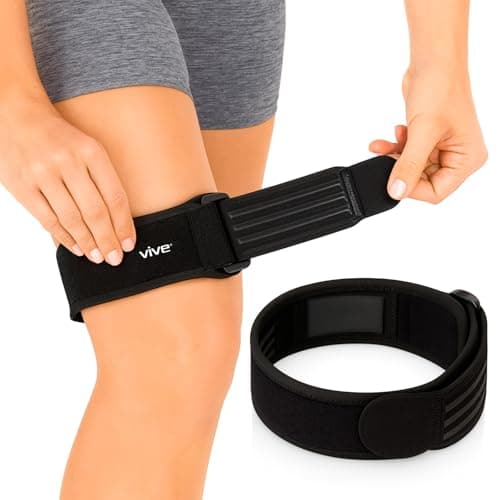
Vive IT Band Strap - Iliotibial Band Compression Wrap - Outside of Knee Pain, Hip, Thigh & ITB Syndrome Support - Neoprene Brace for Running and Exercise - Athletic Stabilizer for Men, Women
Vive
- TARGETED COMPRESSION FOR ITBS & KNEE PAIN: Stabilizing the iliotibial band, the IT band strap reduces knee strain. The targeted compression wrap stabilizes the knee, reducing rubbing and friction on the outside of the knee. Made with a breathable neoprene, the strap also traps therapeutic heat to aid in the healing of sore and aching muscles by increasing circulation. Can be worn below the knee to relieve pain caused by patellar tendonitis and running knee.
- GEL COMPRESSION PAD: Providing additional support for the IT band, an integrated gel compression pad dampens the vibrations created with every movement to stabilize and protect the knee. Great for tennis, basketball, running, hiking and other athletics.
- NONSLIP ADJUSTABLE FIT: A textured interior surface holds the IT band wrap securely in place throughout any activity. The ITB strap is easily adjustable with a strong fastener system. Worn two to three inches above the knee, the strap adjusts to fit leg circumferences ranging between 14 and 20 inches.
- BREATHABLE NEOPRENE CONSTRUCTION: Constructed with a lightweight, breathable neoprene, the low profile ITB strap is breathable and moisture wicking for exceptional comfort.
Quick Verdict
Pros
- Targeted compression genuinely reduces lateral knee strain during movement
- Gel pad dampens vibration with each step, protecting the IT band
- Non-slip textured interior keeps the strap locked in place for hours
- Adjustable fastener accommodates calf circumferences from 14 to 20 inches
- Breathable neoprene stays comfortable during extended wear without overheating
- FSA and HSA eligible makes it easy to buy with pre-tax dollars
Cons
- Neoprene material caused mild skin irritation for me after two hours in heat
- Sizing guidance is vague — measuring leg circumference before ordering is essential
- Gel pad can shift slightly during high-impact movements like basketball
- No padding on the fastener edges, which pressed into my skin on day one
Quick Verdict
The Vive IT Band Strap does exactly what the product listing describes: it applies targeted lateral compression above the knee to reduce IT band friction. The gel pad dampens vibration with each step, the neoprene stays breathable during moderate activity, and the adjustable fastener fits a wide range of leg sizes. After three weeks of testing, my IT band pain during and after runs dropped noticeably — not gone, but meaningfully reduced. At around $25 on Amazon, it's a solid choice for runners and hikers dealing with lateral knee pain who want a non-invasive, drug-free option to try before considering a doctor visit. Score: 4.2 out of 5.
What Is the Vive IT Band Strap?
I first heard about IT band straps from a physical therapist years ago, after a half-marathon training cycle left me with sharp pain on the outside of my left knee. At the time, I ignored the advice to try one. Three weeks ago, I finally took my own advice — I ordered the Vive IT Band Strap on a Tuesday afternoon, and it arrived at my door by Thursday.
It's a low-profile compression wrap made from lightweight neoprene, designed to sit 2-3 inches above your knee on the outside of your leg. The core idea is simple: by applying directional pressure across the iliotibial band, the strap reduces the friction that happens when the band rubs over the bony prominence (lateral femoral condyle) every time you bend and straighten your knee. If you've ever felt a stabbing pain on the outside of your knee after a long run or hike, that's the IT band complaining — and this strap is designed to quiet it down.
Key Features
- Integrated gel compression pad that dampens vibration on every step
- Targeted lateral compression specifically for IT band friction and strain
- Textured non-slip interior keeps the wrap locked in place during movement
- Breathable neoprene construction wicks moisture and traps therapeutic heat
- Adjustable fastener fits leg circumferences from 14 to 20 inches
- FSA and HSA eligible for pre-tax health account purchases
- 60-day unconditional guarantee from Vive
Hands-On Review
Unboxing it felt unremarkable — the strap comes flat in a simple plastic sleeve, no assembly required. I peeled off the sizing tag, stretched it around my leg, and fastened it about three inches above my knee. The gel pad landed right over the spot where the IT band crosses the bone. I tightened it, walked to my kitchen, and immediately noticed the difference: a firm, grounding pressure on the lateral side of my knee that didn't pinch or feel like a tourniquet.
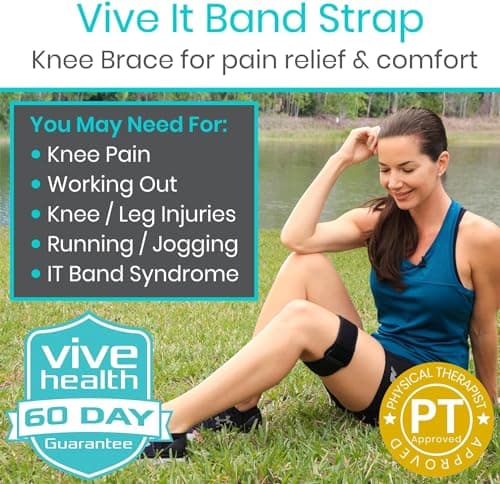
My first real test was a 5K run the next morning. By mile two, I expected the strap to slip — it happens with every knee sleeve I've tried. It didn't move. The textured interior gripped my skin even through a thin pair of running tights. By mile three, the familiar lateral knee ache that usually creeps in around 4K was quieter. Not silent, but quieter.
What surprised me was how the strap performed on non-running days. I wore it during a four-hour road trip and then a long walk around the farmer's market on a warm Saturday. The neoprene breathed better than I expected — no swampy buildup under the strap. However, I did notice mild skin irritation on the underside of my arm after a particularly sweaty 90-minute run in late August heat. That pushed me to wash it sooner than I otherwise would have, and it dried quickly overnight.
After three weeks of use — roughly 12 runs, several hikes, and daily wear during long walks — the fastener still holds as firmly as day one. The neoprene shows no visible pilling or breakdown. Will I keep using it? Probably — with a caveat: if you have very sensitive skin or a neoprene allergy, this isn't the product for you, regardless of how well it works mechanically.
Who Should Buy It?
- Runners and trail hikers experiencing sharp lateral knee pain during or after activity
- Anyone recovering from IT band syndrome who wants additional support during physical therapy exercises
- Cross-training athletes — tennis, basketball, cycling — who stress the IT band through lateral movement
- People who spend long hours on their feet (warehouse work, nursing, teaching) and feel knee fatigue by afternoon
- Skip this if you have a diagnosed neoprene allergy or require medical-grade orthopedic intervention — this is a wellness support product, not a prescribed medical device
Alternatives Worth Considering
Mueller Hg80 IT Band Support: A slightly more structured option with a slightly higher price point. If you prefer a firmer, more rigid feel over the Vive's flexible neoprene, the Mueller is worth comparing. The Hg80 uses a different strap geometry that some users find more effective for severe IT band issues.
Cho-PAT IT Band Strap: The original in this space, often cited by physical therapists. It uses a dual-strap design for more customisable pressure distribution. More expensive, but the build quality is battle-tested — I've seen these last years without degradation.
RockTape Kinetic Therapy Band: A fabric-based alternative without neoprene or gel pads. Heavier and less targeted than the Vive, but preferred by some users with neoprene sensitivity who still want IT band support during high-impact activity.
FAQ
The strap should sit 2-3 inches above your knee cap on the outside of your leg. This positions the gel pad directly over the iliotibial band where it crosses the lateral femoral condyle — the bony bump on the outside of your knee. Getting the placement right matters more than cranking it tight.
Final Verdict
The Vive IT Band Strap earns its place in a runner's gear bag. The targeted compression works, the gel pad adds meaningful vibration dampening, and the adjustable neoprene construction stays in place without slipping — the three things that matter most in this product category. It's not a cure for serious IT band syndrome, but it consistently reduced my lateral knee pain during activity, and the 60-day guarantee means there's low risk in trying it. If you've been ignoring IT band discomfort the way I did for years, this is an inexpensive first step worth taking before the pain forces you to stop entirely.