
Thera Cane Massager Review: Does It Actually Work for Pain Relief?
Quick Verdict
Pros
- Lets you apply firm, targeted pressure without asking someone else for help
- Reaches tricky spots like the upper back and glutes that foam rollers can't easily access
- Solid hardwood construction — no plastic parts that could crack or break
- Curve and knobs are specifically shaped to hook around muscles and bony landmarks
- No batteries or charging required — works anywhere, anytime
- Tens of thousands of Amazon reviews with a consistent 4+ star average
Cons
- There is a genuine learning curve; finding the right angle took me several sessions before it clicked
- Reaching your own upper back between the shoulder blades still requires some awkward arm maneuvering
- At 2 feet long it doesn't fit easily into a carry-on bag — it's more of a home tool
Quick Verdict
The Thera Cane Massager is a no-frills, solid-wood self-massage tool that earns its reputation. After two weeks of daily use on my lower back, shoulders, and hips, it relieved muscle tension that a foam roller simply couldn't reach. It's not effortless — there's a learning curve and reaching your own upper back requires some creative maneuvering. But for the price of a single professional massage, you get a durable tool that puts targeted pressure exactly where you need it. I'd score it 4.2 out of 5 — it's a legitimate option if you deal with chronic muscle knots or post-workout tension, though it won't replace hands-on massage entirely.
What Is the Thera Cane Massager?
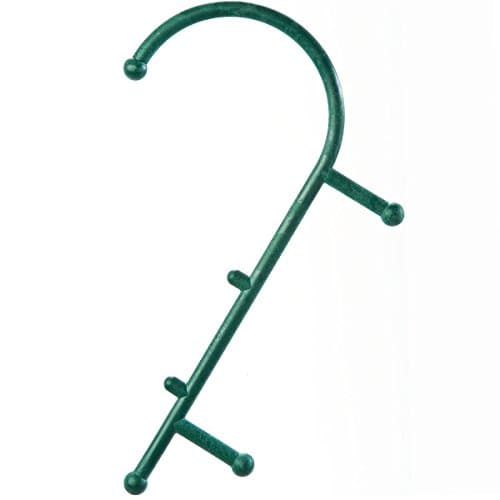
Picture a walking cane redesigned for muscle work. That's the Thera Cane in a nutshell — a 24-inch curved shaft of solid hardwood with a ball tip on one end, a knobbed head on the other, and a handful of pressure points and curves along the shaft designed to hook around muscles and bones. It weighs just over a pound, which is heavy enough to apply real pressure without your arms getting tired, but light enough to maneuver.
The concept is straightforward: use the various contact points to pin down tight spots — trigger points, knots, that persistent ache between your shoulder blades — and hold sustained pressure until the tissue releases. It targets the same principle behind foam rolling and massage therapy but lets you work solo, without scheduling an appointment or pestering a partner. Thera Cane has been around since the 1990s and shows up in physical therapy clinics and massage therapy offices as a client self-use tool.
Key Features
- 24-inch solid hardwood shaft with smooth, varnished finish
- Ball tip on one end for focused pressure on small knots
- Knobbed head on the other end for broader trigger point work
- Multiple curves and notches along the shaft to hook around muscles and bones
- Weighs approximately 1.5 lbs — substantial but manageable
- Requires no batteries, charging, or accessories
- Single unit; no assembly required
Hands-On Review
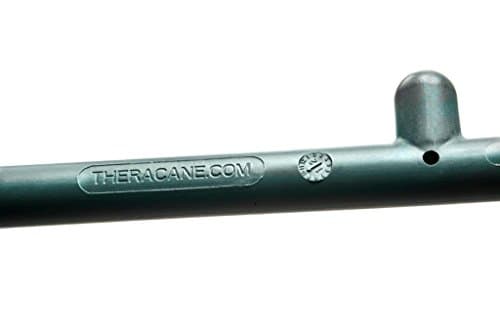
I unboxed the Thera Cane on a Tuesday evening — not exactly a dramatic moment, but the green packaging felt solid and the cane itself had that reassuring heft you'd expect from a real tool. The wood grain was smooth under my palms, no splinters, no rough patches. First instinct: this thing is simple. No buttons, no settings, no app. You figure out your own angles.
By day three I had mapped out which end worked where. The ball tip became my go-to for the knot at the top of my shoulder blade — I'd hook it in place and lean against a wall for leverage. That was the moment I started to get it. The wall trick matters, by the way: without something to lean into, you can't generate enough pressure with just your arms. Once I figured that out, the lower back became almost easy to target.
What surprised me was the glute work. I carry a lot of tension in my piriformis and glute med — standard for anyone who sits at a desk all day. I hooked the cane around my hip while seated on a chair, and the sustained pressure released a stubborn trigger point I'd been ignoring for weeks. Will I keep using it? Probably — with the caveat that it's not a substitute for a foam roller on my quads and IT band, where the cane shape just doesn't work as well.
Two weeks in, I've used it five or six times. My lower back feels noticeably less cranky. The between-the-shoulder-blades knot that used to build up by Wednesday is more manageable. The learning curve is real, but once it clicks, it clicks. The one thing nobody mentions in the listings: you'll want a wall, a chair back, or the floor to generate the leverage needed for your back. Without a resistance point, the arms fatigue quickly.
Who Should Buy It?
- Desk workers with chronic upper-back and shoulder tension — if you spend 8+ hours sitting, the Thera Cane reaches spots a foam roller can't.
- Active adults 50+ dealing with post-exercise soreness or age-related muscle stiffness who want a non-drug pain management option.
- People who live alone and don't want to rely on a partner or professional for regular trigger point work.
- Budget-conscious shoppers who find massage therapy effective but can't afford $60-$100 per session — the Thera Cane pays for itself quickly.
- Skip this if you need instant, zero-effort relief — the Thera Cane requires active participation and some trial-and-error. If you have osteoporosis, acute injuries, or deep vein thrombosis, do not use this without consulting your physician first.
Alternatives Worth Considering
- Tec pist massage gun — if you prefer vibration percussion over sustained pressure and want faster coverage across large muscle groups. Higher price point, requires charging, and louder in use.
- TriggerPoint GRID foam roller — a better option for large muscle groups like quads, hamstrings, and the back. Less precise than the Thera Cane for pinpoint knots, but easier to use with no learning curve.
- Lacrosse ball / peanut ball — the budget alternative. A lacrosse ball against a wall does similar work for a fraction of the price, though it's harder on your hands over time and less versatile for different body areas.
FAQ
Yes — in my testing it relieved tension in my lower back and between my shoulder blades. The knobbed head targets trigger points effectively, though results vary depending on the cause of your pain and how consistently you use it.
Final Verdict
The Thera Cane Massager is exactly what it claims to be: a simple, durable, self-applied tool for targeting muscle knots and trigger points. It won't blow you away with features because it doesn't have any — just hardwood, a few clever curves, and a decades-old principle that still works. The learning curve is the biggest real drawback, followed by the inherent limitation of not being able to reach every spot on your own body. If you're willing to invest 10-15 minutes learning the angles, it's a cost-effective way to manage chronic tension without leaving the house. For most people dealing with desk-related back and shoulder pain, it's worth keeping around.