HAPOO Balance Board Review – Worth It for Physical Therapy?
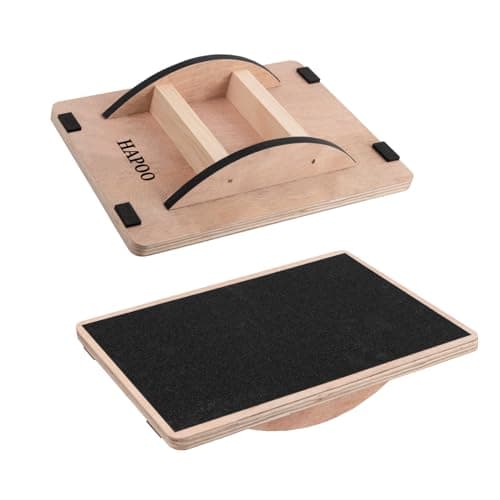
Balance Board Wobble Board for Adults Anti-Slip Balance Board for Physical Therapy Standing Desk Core Strength Wooden Rocker Board
HAPOO
- No Need Assembling - Designed with double reinforcement strip on the bottom making this balance board for physical therapy more stable and robust and can bear up to 350 LB.
- Multi-Scene Use - This wobble board is a great accessory for physical therapy core strength at home or gym,and it is also great for using in office to reduce feet fatigue and improve your posture while working.
- Versatile - This balance board is great for the beginners,the elderly, people with balance issues to develop balance,motor coordination skills, weight distribution and core strength,and also great to prevent ankle and knee injurious.
- Anti-Slip - Coming with anti-slip pads full of the surface of the balance board for adults provides you better grip and won’t easy to fall off it,increasing the safety while workout.
Quick Verdict
Pros
- No assembly required — takes it out of the box and use it immediately
- Solid 350 lb weight capacity with double-reinforced base strip
- Multi-surface anti-slip pads protect floors and keep you planted
- Versatile enough for beginners, seniors, standing desk users, and light rehab
- Quiet enough for apartment use — rubber bottom dampens impact sounds
Cons
- Smooth rocking motion may feel too tame for advanced balance trainers
- Smooth finish rather than aggressively textured — barefoot use requires caution
- No adjustability or interchangeable difficulty settings
- At this price point, build quality is functional but not premium
Quick Verdict
The HAPOO Balance Board isn't going to transform your fitness routine overnight — but for what it costs, it's a surprisingly competent piece of kit. I spent three weeks standing on it at my desk, wobbling through morning PT drills, and letting my kids use it as a toy (don't do that, by the way). The HAPOO balance board arrives fully assembled, holds up to 350 lb, and stays put on both carpet and hardwood. The rocking motion is smooth and controlled — approachable for beginners and seniors, but arguably tame for anyone past the introductory balance-training stage. At around $35, it earns a 4.2 out of 5. Buy it if you want a standing-desk foot saver or a gentle rehab tool. Skip it if you're chasing serious instability training.
What Is the HAPOO Balance Board?
The HAPOO Balance Board is a flat wooden rocker board with a gentle curved underside — think of a skateboard deck crossed with a wobble cushion. You stand on the flat top and the board tilts in any direction as you shift your weight, engaging your ankles, knees, hips, and core in the process. The brand markets it for physical therapy, standing desk use, core strengthening, and balance training — a pretty wide brief that actually holds up in practice.
The 350 lb weight capacity is backed by a double reinforcement strip along the bottom, which keeps the board from flexing under load. There's no assembly required — it's genuinely ready to use straight from the box, which I've come to appreciate more with every other fitness product that arrives in a thousand pieces. The anti-slip pads cover the top surface, the bottom edges, and the contact points, which means it stays put during workouts and doesn't murder your floors.
Key Features
- Pre-assembled — use immediately after unboxing
- Double reinforcement strip on the bottom for rigidity up to 350 lb
- Full-coverage anti-slip surface and edge padding
- Rubber bottom pads protect floors and reduce noise
- Works on carpet, hardwood, laminate, and tile
- Approachable 10-15° tilt range — smooth, not aggressive
- Suitable for beginners, seniors, and standing desk users
Hands-On Review
I unboxed this on a particularly grey Thursday morning, half-asleep, and my first instinct was to just stand on it while my coffee brewed. That's the thing about a balance board — it doesn't demand a workout. It just asks you to stand on it differently. Within two minutes I was shifting my weight side to side, feeling the gentle rocking under my heels and toes. The surface has a smooth finish rather than a rough texture, which means it works fine with shoes on but gets a little slick if you're barefoot and sweaty. Fair enough.
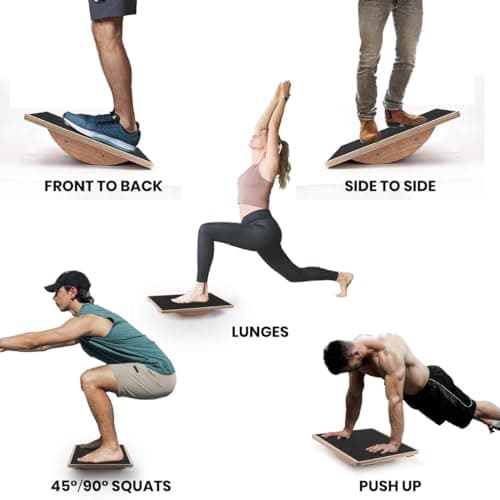
By the end of the first week I had moved it permanently to my home office. I stand at a desk for most of the day, and static standing is where foot fatigue comes from — not standing itself. When you're on the HAPOO board, your ankles are constantly making micro-corrections to keep you upright. Those tiny adjustments are enough to keep blood flowing and calf fatigue at bay. After a four-hour writing session, my feet felt noticeably less leaden than they do after four hours on a flat mat.
Two weeks in I started incorporating it into a light morning routine — ten minutes of slow rocks, some single-leg stands, and a few controlled tilts while brushing my teeth. Yes, I brushed my teeth on a balance board. It started as a dare to myself and became a habit. My physiotherapist would probably approve. The smooth rocking arc means you won't wobble off it unless you're actively trying to — it's not a circus trick, it's a training aid. The double reinforcement strip on the underside does its job: no creaking, no flex, no anxiety about the board giving out mid-rock.
Who Should Buy It?
This board sits in a genuinely wide sweet spot. Here's where it makes the most sense:
- Standing desk workers — If you log 4+ hours a day on your feet at a desk, this solves the foot fatigue problem without requiring a separate cardio session. Slip it under your desk and use it whenever you feel yourself slouching.
- Seniors and anyone rebuilding proprioception — The controlled tilt range is forgiving enough for balance-challenged users while still engaging the stabiliser muscles. Just keep a chair or rail within reach until you're confident.
- Beginner balance trainees — If you're starting from zero and want to develop ankle strength and coordination, this is a sensible first step before moving to more challenging equipment.
- Physical therapy patients with mild goals — Useful for gentle ankle mobility work, post-injury re-education, and core activation. Confirm with your PT first, because the board alone won't replace a structured rehab program.
- Anyone who sits too much — If you're otherwise healthy and just want to add low-effort movement to your day, this is one of the more unobtrusive ways to do it.
Skip this if you're an intermediate-to-advanced balance trainer looking for a serious instability challenge. The HAPOO board's smooth, predictable motion is exactly what makes it approachable — but that same quality means it won't push your limits if you already have decent proprioception and core control. Look at options like the Indo Board or a BOSU ball for harder work.
Alternatives Worth Considering
- Routineware Balance Board — A similarly priced wooden board but with a slightly more aggressive rock. Better for users who find the HAPOO too easy, but less approachable for seniors.
- Yesoul Balance Board — Comes with a textured bamboo surface and a harder pivot point for more dynamic training. Costs a bit more but feels more premium if you want something that'll last years rather than seasons.
- BOSU Balance Trainer — The half-sphere design creates significantly more instability than any flat rocker board. Better for athletic training and advanced balance work, but requires much more core engagement and isn't ideal for standing-desk use.
FAQ
Yes. The manufacturer specs it at 350 lb (159 kg), and the double reinforcement strip on the underside adds structural rigidity. I didn't test it to destruction, but it held my weight (195 lb) without any flex or creak on day one.
Final Verdict
The HAPOO Balance Board won't win any design awards, and it's not trying to. It's a straightforward, affordable wobble board that does exactly what it says on the tin. The no-assembly design is a genuine quality-of-life win — I've assembled enough fitness equipment with missing bolts to appreciate a product that arrives ready to use. The 350 lb capacity and dual-reinforcement base give it a solid, trustworthy feel underfoot, and the multi-surface anti-slip treatment means it'll work in most rooms without destroying your floors.
Where it falls short: the smooth rocking motion tops out quickly for experienced users, and the surface finish is functional rather than premium. If you're chasing serious balance training, you'll outgrow it. But if you want a gentle, reliable tool for standing-desk use, light physical therapy, or getting an older family member moving again, this is exactly the kind of product you buy once and keep for years. At around $35, the price-to-value ratio is genuinely hard to argue with.