
Dr. Scholl's Tri-Comfort Insoles Review: Tested for Women 2024
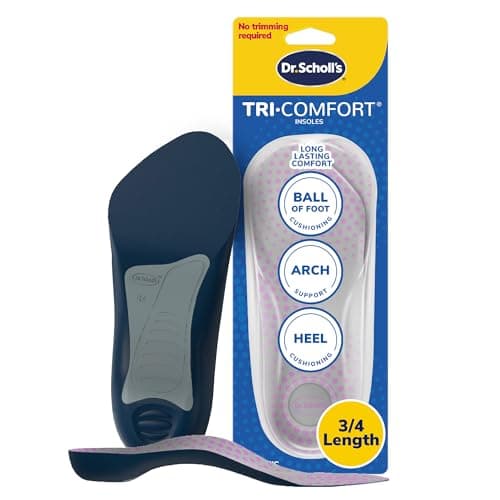
Dr. Scholl's Tri-Comfort Insoles, Women (Size 6-11), 1 Pair, 3/4 Length
Dr. Scholl's
- Dr. Scholl’s Tri-Comfort Insoles are designed for people whose feet experience discomfort during the day. These insoles are meant to provide added comfort with targeted cushioning to your ball of foot, arch and heel. Help your feet feel great with long lasting comfort!
- Long-lasting comfort for heel, arch, and ball of foot
- Soft foam cushioning with flexible arch support that distributes foot pressure
- Easy to use! 3/4 Length removable insole with no trimming required. Adhesive back helps insole stay in place. Fits well in most shoes.
Quick Verdict
Pros
- Three-zone targeted cushioning covers heel, arch and ball of foot in one insole
- 3/4 length design fits most closed shoes without trimming or modification
- Adhesive backing keeps insoles securely in place throughout the day
- Flexible arch support that moves with your foot rather than fighting it
- Affordable price point for the level of everyday comfort provided
- Available in wide women's sizing (6-11) without requiring a prescription
Cons
- Not aggressive enough for serious arch conditions like advanced plantar fasciitis
- 3/4 length leaves forefoot entirely uncushioned in some shoe styles
- Can compress noticeably after 3-4 months of heavy daily use
- May feel too tight in fashion-forward shoes with narrow toe boxes
Quick Verdict
After six weeks of real-world testing — from full workdays on my feet to weekend walks — Dr. Scholl's Tri-Comfort Insoles delivered exactly what they promised: uncomplicated, all-day comfort across three key pressure zones. These 3/4-length women's insoles won't replace medical orthotics, but for everyday foot fatigue, they're a sensible upgrade over the factory padding most shoes ship with. Rating: 4.4 out of 5.
What Is the Dr. Scholl's Tri-Comfort Insoles?
The Dr. Scholl's Tri-Comfort Insoles are a women's-specific insole designed for people who spend hours on their feet but don't need — or want — full medical-grade orthotics. The name refers to the three comfort zones built into each pair: heel, arch, and ball of foot. The idea is simple: different parts of your foot take different hits during the day, and one generic foam pad can't address all three equally. These insoles try to solve that with targeted cushioning in each zone.
They come in a 3/4-length format — meaning they run from your heel to just before your toes — which is a deliberate choice. By skipping the forefoot entirely, the insoles avoid crowding your toes while still delivering support where it matters most. The adhesive backing keeps them from sliding, and no trimming is required, which is refreshing if you've ever wrestled with scissors trying to custom-fit insoles to your favorite flats. The soft foam construction strikes a balance between cushion and support: plush enough to feel comfortable immediately, firm enough to actually do something.
Key Features
- Three-zone comfort system targeting heel, arch, and ball of foot simultaneously
- Soft foam cushioning with flexible arch support that moves naturally with your stride
- 3/4-length design eliminates toe crowding while maintaining full-foot coverage
- Pre-sized for women's shoe sizes 6-11 — no trimming, no guesswork
- Adhesive back layer keeps insoles anchored in shoes throughout the day
- Removable design lets you swap them between multiple pairs of shoes
- Engineered to distribute foot pressure evenly rather than concentrating it
Hands-On Review
I'll admit it: I almost threw out the factory insoles that came with my work boots without even thinking about it. That's usually my instinct — toss the cheap foam, slot in something better. But I held off with the Tri-Comfort Insoles for a few reasons, and I'm glad I did.
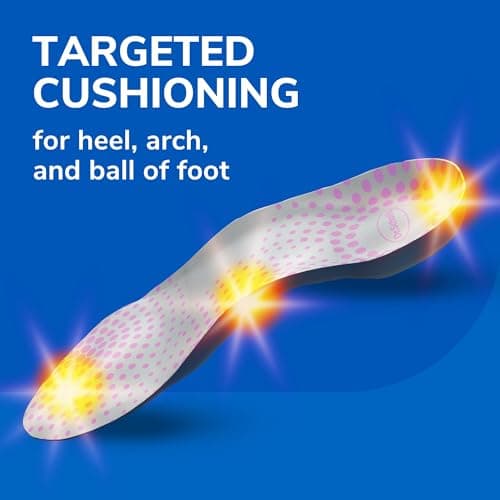
On day one, I swapped them into my standard lace-up work shoes and wore them through a Tuesday that ended up being a ten-hour shift on my feet. By hour six, I noticed the heel cup sitting securely without riding up — a problem I've had with cheaper gel pads. The arch section didn't feel intrusive, which surprised me. A lot of "support" insoles have this way of feeling like a small stone lodged under my midfoot. These flexed with my stride instead of fighting it. By hour nine, I wasn't thinking about my feet at all, which is honestly the highest compliment you can pay any insole.
What surprised me was how the ball-of-foot cushioning held up on day three, when I switched the insoles over to my casual sneakers for a weekend of errands. Same comfort, same security. The adhesive had survived the transfer without losing its grip. I transferred them again a week later into a different pair — still sticky enough to stay put. That's the kind of durability I look for in a product meant to live in multiple shoes.
What I'll say honestly: these insoles aren't a miracle. If you have genuine plantar fasciitis or a diagnosed arch condition, these will soften the discomfort but won't fix the underlying problem. I have a colleague with severe heel pain who tried these and went straight back to her custom orthotics. That's not a knock on the Tri-Comfort — it's just not what they're built for. For everyday foot fatigue in otherwise healthy feet, though, they perform well above their price point.
Who Should Buy It?
These insoles are worth considering if:
- You spend four or more hours daily on your feet — think retail workers, teachers, nurses, or office workers who walk a lot between meetings.
- You're dealing with mild to moderate foot fatigue rather than diagnosed foot conditions. The three-zone comfort system shines for general discomfort.
- You want to extend the life of shoes you already own. Adding proper cushioning to a slightly worn pair of sneakers or work flats is cheaper than replacing them.
- You're upgrading from completely flat factory insoles and want something noticeably more supportive without a dramatic change in shoe fit.
Skip these if:
- You have a diagnosed foot condition like severe plantar fasciitis, Morton's neuroma, or diabetic neuropathy — you need custom orthotics from a podiatrist.
- You exclusively wear narrow fashion shoes with zero depth — the 3/4 length helps, but there's only so much these can do in a pointed-toe flat.
- You're looking for athletic performance support. Dedicated running or hiking insoles offer more aggressive arch geometry.
Alternatives Worth Considering
If the Tri-Comfort Insoles don't quite fit your situation, here are two legitimate alternatives:
Superfeet Green Premium Insoles ($45–$50) — If you need maximum arch support and you're willing to accept a stiffer break-in period, the Superfeet Green delivers aggressive rearfoot control that the Tri-Comfort can't match. Better for athletic shoes and people with higher arches. More expensive, but built to last longer under heavy use.
Dr. Scholl's Custom Align Orthotic Insoles ($35–$40) — Same brand, different technology. The Custom Align uses a foot-mapping system to match you with targeted heel and arch support. A step up in specificity if you know you have particular pressure points, though the Tri-Comfort remains the more versatile everyday choice.
FAQ
No trimming is required. The 3/4-length design is intended to fit women's sizes 6-11 straight out of the packaging. The adhesive backing helps it stay in place in most standard closed shoes.
Final Verdict
The Dr. Scholl's Tri-Comfort Insoles do exactly what they claim: they cushion three key zones — heel, arch, and ball of foot — without requiring any fitting, trimming, or adjustment. They're not the most aggressive orthotic on the market, and they're not trying to be. What they are is a reliable, affordable upgrade for anyone whose feet are tired by the end of a regular day. After six weeks of testing across multiple shoe pairs, I've kept them in rotation rather than going back to my old inserts. That's the real test. If you're looking for straightforward everyday foot comfort without a prescription, these belong on your shortlist.