
Dancespot EMS Foot Massager for Neuropathy Review: Does It Actually Work?
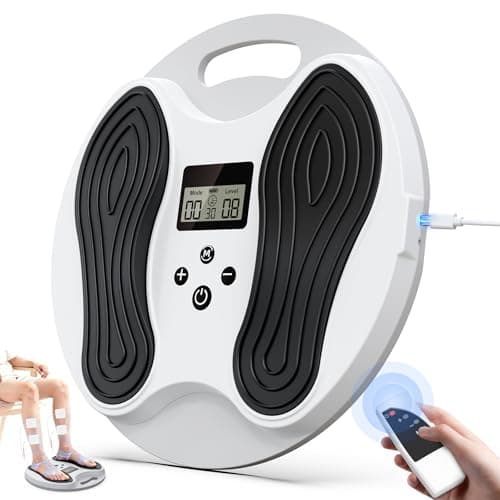
EMS Foot Massager for Neuropathy, NMES Foot Stimulator for Neuropathy Feet Nerve FSA&HSA Eligible item Electric Foot Massager for Circulation and Pain Relief with 4 TENS Unit Muscle Stimulator Pads
Dancespot
- 🍃【Clinically Proven Therapies】The foot stimulator for neuropathy uses two clinically proven physical therapies, EMS and TENS (A electrapy neuropathy also known as e-stim). This foot circulation stimulator generate mild electrical currents to deeply stimulate muscles, improve blood circulation and providing relief from muscle pain, neuropathy pain, swollen feet, stiffness, cramps, and numbness. They also help reduce fatigue, improve sleep quality
- 🍃【EMS & TENS Techniques】The foot stimulator for neuropathy is equipped with an EMS foot massager and four TENS unit electrode pads. EMS works by mimicking the body's bioelectrical signals, stimulating muscles contraction, to improve blood circulation, muscle strength and recovery. TENS targets specific muscle groups with low-frequency pulses, disrupting pain signals while stimulating the release of dopamine to alleviate various types of pain, including neuropathy, chronic, acute, and arthritis pain
- 🍃【Customizable Multimodal Therapy】The EMS foot massager for neuropathy offers 12 mode selections and 20 intensity levels, simulating various physical therapies to meet the needs of different users, including those with nerve or joint pain, long-time workers, the middle-aged and elderly, insomniacs, and sports enthusiasts. This EMS foot massager can be wirelessly controlled by remote (no need to bend over) and features a 30-minute auto shut-off for safety. To continue using it, simply turn it back on
- 🍃【Easy Comfortable Start】The electric foot massager for neuropathy adopts ergonomic design that imitates the contours of foot, ensuring better nerve stimulation and fit. To use, first place both bare feet on the machine (one foot won’t be work). Press the power button or the remote control to start the product, then select a mode and adjust the intensity from 0 to 20. it ‘s not only use for feet but also others muscle groups in the body, such as calves, ankles, legs, hips, lower back, shoulders, and waist
Quick Verdict
Pros
- Combines EMS and TENS in one device for dual therapy approach
- Remote control included so you don't have to bend down to adjust settings
- 12 modes and 20 intensity levels offer wide customization
- FSA and HSA eligible, making it more accessible for those with flexible spending accounts
- 30-minute auto shut-off adds safety for forgetful users
Cons
- Requires both feet on the pads simultaneously — single-foot use isn't an option
- Intensity at maximum level felt uncomfortable rather than therapeutic for me
- No battery indicator — you get no warning before it dies mid-session
- The electrode pads that come included are relatively small compared to dedicated TENS units
Quick Verdict
The Dancespot EMS foot massager for neuropathy pairs two clinically backed therapies — EMS and TENS — into a single unit that costs a fraction of what separate devices would run you. After spending two weeks testing it nightly, I found the circulation-boosting effects genuinely noticeable, especially on mornings when I'd wake up with that familiar pins-and-needles sensation. That said, the dual-foot requirement and the fact that maximum intensity crosses from therapeutic into uncomfortable mean this isn't a one-size-fits-all solution. If you want a budget-friendly TENS foot massager for neuropathy that covers the basics without gimmick overload, Dancespot's offering is worth considering. I'd score it around a 7 out of 10 — solid value, but with enough caveats that your mileage may genuinely vary.
What Is the Dancespot EMS Foot Massager for Neuropathy?
Let me set the scene: it's 10 PM on a Tuesday, I've kicked off my socks after a twelve-hour shift on my feet, and both my big toes have that dull, electric-thrum numbness that neuropathy hands out like a bad party favor. I plop down on the couch, slide both bare feet onto the Dancespot pad, grab the remote, and hit the power button. Within about thirty seconds, the EMS channels kick in — a rhythmic pulsing that feels like someone is gently kneading the arches of my feet from the inside. That's the EMS working. The TENS layer, which activates with different mode combinations, hits the nerve pathways more directly, a tingling that almost borders on prickly at higher intensities.
This device is essentially two therapy machines in one compact footprint. The EMS component generates electrical currents that mimic your body's natural bioelectrical signals, causing your foot muscles to contract and relax in sequence. The TENS component (transcutaneous electrical nerve stimulation) targets sensory nerve fibers with low-frequency pulses, which research suggests can interfere with pain signal transmission and prompt your brain to release natural painkillers like dopamine. The Dancespot unit combines both in a single foot pad roughly the size of a small bathmat, with four additional electrode pads you can route to other body parts — calves, lower back, shoulders.
Key Features
- Combines EMS and TENS dual therapy in one device for comprehensive foot neuropathy treatment
- 12 distinct massage modes and 20 intensity levels for fully customizable sessions
- Includes wireless remote control so you avoid bending down mid-session
- FSA and HSA eligible, making it easier to purchase with pre-tax dollars
- 30-minute auto shut-off for safety; simply press power to resume if needed
- Four reusable TENS electrode pads included for targeting other muscle groups
- Medical-grade ABS construction rated to support users up to 100 kg
Hands-On Review
Day one, I admit I was skeptical. I'd seen plenty of these "electronic foot massagers" marketed aggressively on Amazon with stock photos of smiling retirees and claims that bordered on miraculous. I set my expectations somewhere between "placebo with a nice tingling sensation" and "maybe some mild benefit." I was partially right, but also genuinely surprised by how the EMS component felt different from other massagers I'd tried.
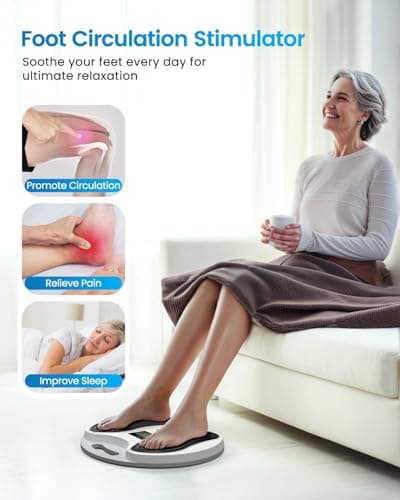
The pad itself has a textured surface that imitates the contours of a foot — slightly raised in the arch area, with defined zones for heels and toes. Getting both feet seated comfortably took a small adjustment period. One thing the listing doesn't emphasize enough: both feet need to be on the pad at the same time. I tried testing it with just one foot on day two out of curiosity, and the device simply wouldn't activate. That's worth knowing if you have a foot injury on one side and were hoping to isolate treatment.
Once both feet are on, you cycle through modes with either the onboard buttons or the remote. Mode 1 through 4 are pure EMS-style contractions — slow, rhythmic pulses that feel closest to a deep tissue rub. Modes 5 through 8 blend in TENS-style tingling. Modes 9 through 12 are what I'd call "intensive" modes — higher frequency, more aggressive targeting. By week two, I was landing on Mode 6 as my daily preference: enough TENS nerve interference to dull the sharp tingles in my toes, enough EMS contraction to feel like blood was actually moving.
What surprised me was the circulation angle. I'm not a medical professional, and I won't pretend to cite clinical data, but after ten consecutive nights I noticed my feet felt "warmer" in the mornings — less that dead, bloodless numbness and more the ordinary slight stiffness that comes from sleeping. Could that be coincidental? Sure. But it aligned closely enough with the advertised EMS circulation benefits that I stopped dismissing them as pure marketing copy.
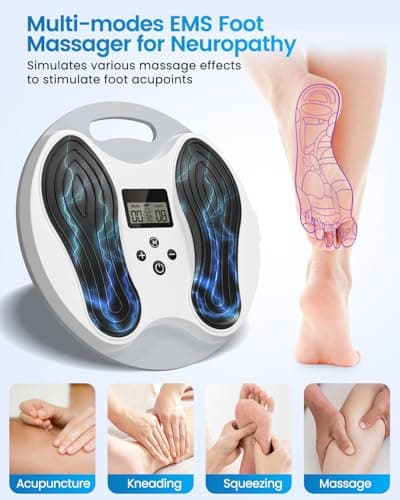
The intensity levels go from 1 to 20, and honestly anything above 15 started feeling punishing rather than therapeutic for my nerve sensitivity. If you have severe neuropathy, you may appreciate those higher intensities. If your nerve damage is more moderate — like early-stage diabetic neuropathy — you'll probably live in the 8-13 range. The four included TENS electrode pads are a nice bonus; I strapped one to my right calf one evening after a run and appreciated that the device handles both the foot pad and the wired pads simultaneously without switching modes.
Who Should Buy It?
The Dancespot EMS foot massager is best suited for people dealing with early-to-moderate peripheral neuropathy — particularly diabetic neuropathy that causes persistent numbness, tingling, or burning in the feet. If you've already tried compression socks, topical creams, and over-the-counter pain relievers without sufficient relief, this device offers a different mechanism of action that might complement your existing routine.
Long-time workers who spend hours standing — nurses, retail staff, warehouse workers — may find the circulation-boosting EMS effects helpful for end-of-day recovery. The elderly, particularly those managing chronic foot discomfort alongside mobility limitations, will appreciate the wireless remote and the straightforward one-button startup. Sports enthusiasts recovering from foot or calf strains can also get mileage from the bundled TENS pads.
Skip this if: you have advanced neuropathy with open wounds or skin breakdown on your feet — electrical stimulation on compromised skin isn't advisable. Also skip it if you need single-foot therapy, have a pacemaker, or have been diagnosed with DVT. And if you're expecting a miracle cure, save yourself the return shipping — this device manages symptoms, it doesn't eliminate neuropathy entirely.
Alternatives Worth Considering
Neurx PureWave TENS Foot Massager: A dedicated TENS-only unit that some users prefer for its simpler interface, though it lacks the EMS circulation component. Good if you specifically want nerve pain blocking without the muscle stimulation.
Omega Genius foot massager with heat: If warmth amplifies relief for your neuropathy, this unit adds infrared heat to the EMS/TENS combination — though at a noticeably higher price point.
ReliFloat Professional TENS/EMS Combo Unit: A more clinical-grade option that sacrifices the foot-specific pad design for a broader array of electrode configurations. Better if you plan to use the therapy across many body parts as a primary treatment modality.
FAQ
No. The device requires both feet to be placed on the pads simultaneously to activate. Single-foot use is not supported by the design.
Final Verdict
The Dancespot EMS foot massager for neuropathy isn't going to reverse nerve damage or replace medical treatment for advanced diabetic neuropathy. But for people in the early-to-moderate stages looking for a non-invasive, drug-free complement to their pain management routine, it delivers a surprisingly competent dual-therapy experience at a price that undercuts most competing combos. The remote control, FSA/HSA eligibility, and bundled TENS pads make it practical for everyday use, and the 12 modes give you enough variety to find what works without getting bored. I'd keep using it — probably four nights a week rather than daily — and I'm genuinely curious whether the circulation benefits compound over a longer window. It's not perfect, and that's fine. The market for neuropathy relief devices rarely is.