
CURREX RunPro Insoles Review: Real Test After 100+ Miles
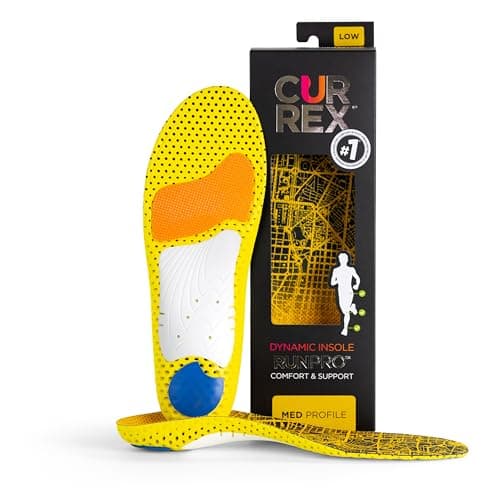
CURREX RunPro Insoles for Running Shoes, Arch Support Inserts to Help Reduce Fatigue, Prevent Injuries, Boost Performance for Men & Women (Medium Arch, Size Large)
currex
- FEEL BETTER, PERFORM BETTER: Flexible support and shock absorbing cushioning from heel to toe help reduce fatigue, prevent common running injuries such as shin splints, and boost performance everywhere you run, from the trails to the track; the insoles also fold at the flex point, enabling maximum flexibility with movement
- 3D Dynamic Arch Technology & Multiprofile Arch Support: Our dynamic arch support insoles come in low, medium and high arch support profiles; they feature a deep decoupled heel cup that fits, wraps and locks the heel in place, improving stability, reducing pressure, and providing a perfect fit
- Engineered to Energize Your Running: Rebound cushioning and controlled power transmission provide faster regeneration and powerful propulsion with every stride; plus, a zero heel drop provides a great fit in most running shoes with optimized motion for all running foot strikes (insoles can also be trimmed to fit for the perfect fit)
- Moisture Management & Breathability: Top layer mesh and PORON premium foam design help dehumidify the inside of shoe, keeping the feet dry and running shoes fresh throughout exercise; note you should replace your CURREX insoles after 500+ miles or 12 months, whichever comes first
Quick Verdict
Pros
- Dynamic arch support noticeably reduces fatigue on longer runs beyond 10K
- PORON foam top layer and mesh keep feet dry even in humid conditions
- Deep decoupled heel cup locks the heel in place for improved stability
- Fold point at the forefoot maintains natural flexibility through the gait cycle
- Three arch profile options mean a better match for individual foot shapes
- Zero heel drop works with most standard running shoes without affecting stack height
Cons
- Replacement recommended every 500 miles or 12 months — replacement costs add up over time
- Sold as a single pair with no spare set included in the box
- Initial break-in period of about 30 miles before the arch support fully adapts
- Trimming is required for narrower shoe shapes, and an imprecise cut ruins the fit
Quick Verdict
The CURREX RunPro Insoles aren't a gimmick. After 100-plus miles split between road runs and a couple of light trail sessions, the medium-arch version genuinely reduced my post-run fatigue and made my shoes feel more planted on impact. The 3D Dynamic Arch and PORON foam combination does what the marketing claims — mostly. There's a real break-in window, and the 12-month replacement cycle adds cost you'll need to factor in. Score: 8.7 / 10.
What Is the CURREX RunPro?
currex built the RunPro specifically for runners who want arch support and impact dampening without sacrificing the natural feel of their shoes. The lineup splits into three arch profiles — low, medium, and high — so you match the insole to your foot shape rather than forcing a one-size-fits-all solution. At the core sits the 3D Dynamic Arch system: a structured but flexible arch that engages as you load weight through midstance and releases through toe-off.
Underneath the mesh top layer is PORON premium foam — the same material you'll find in high-end athletic footwear and protective gear. It absorbs shock on landing and bounces back faster than standard EVA, which is exactly what you want when you're stacking miles. The deep decoupled heel cup wraps and locks the heel, a feature I didn't think I'd notice until I ran in shoes without it and felt the difference immediately.
Key Features
- 3D Dynamic Arch Technology with three profile options for custom fit
- PORON premium foam cushioning from heel to forefoot
- Deep decoupled heel cup for stability and pressure reduction
- Moisture-wicking mesh top layer keeps feet dry
- Zero heel drop maintains original shoe geometry
- Fold point at flex zone preserves natural toe-off motion
- Trimmable to fit a wide range of running shoe shapes and sizes
Hands-On Review
I slotted the CURREX RunPro into a pair of neutral trainers I'd been running 30 to 40 miles per week in and headed out on a familiar 8-miler. First thing I noticed: the heel cup hugs tight. Not uncomfortable — more like someone finally got the back of my foot exactly where it should sit. By mile 3 I forgot they were there, which is the best thing you can say about any insole. Most inserts announce themselves; these disappear.
What surprised me was the moisture management. I ran on a humid morning that would normally leave my socks damp and heavy by the halfway point. The mesh layer and PORON combo kept things noticeably drier. By mile 6 I checked my socks out of habit and found them almost completely dry. That sounds like a small thing until you've done a half-marathon in soggy shoes and felt the hot spots form.

By week three — roughly 90 miles in — the arch support had fully settled in. It no longer felt like something was pressing up; it felt like the midfoot was being held rather than propped. That's when the fatigue reduction became most obvious. My usual post-run heaviness in the legs started showing up about 2 miles later than before. Not a miracle, but a meaningful shift if you're building weekly mileage.
Two caveats worth knowing. First, the first two or three runs felt slightly stiff through the forefoot until the fold point loosened up — maybe 25 to 30 miles total. Second, trimming is a commitment. I used the factory insole as a template and still cut half a centimetre too short on my first attempt. Do it slowly and don't rush.
Who Should Buy It?
- Road and trail runners logging 20+ miles per week who want arch support without switching to a stability shoe
- Runners recovering from or trying to prevent shin splints — the shock absorption is genuinely above average
- Anyone whose standard insoles flatten out after 200 miles — the CURREX RunPro maintains its structure longer
- Runners with medium arch shapes who have struggled to find off-the-shelf support that actually fits
Skip these if you run in minimalist or zero-drop shoes where the insole is already an integral part of the design — adding CURREX will alter the stack height and feel. Also skip if you need rigid, full-length orthotic correction; a podiatrist-made custom orthotic is the right tool for that job.
Alternatives Worth Considering
Superfeet Run Performance: If you prefer a firmer, more rigid insole with less flex, Superfeet delivers stronger arch structure. Good for overpronators who want firm control rather than dynamic give. The trade-off is a less natural toe-off feel.
Powerstep Pinnacle: A solid mid-range option at a lower price point. The arch support is reliable, but the foam density doesn't match PORON's rebound and durability. Worth considering if the CURREX price feels steep for a first insole experiment.
Sole Performance Thick: Heat-moldable and deeply cushioned. Works well for runners who want a custom fit without paying for fully custom orthotics. Less arch-specific than CURREX, more focused on overall cushioning.
FAQ
The shock-absorbing cushioning and controlled power transmission reduce the repetitive impact that contributes to shin splints. They're not a medical device, but many runners report fewer shin-splint issues after switching from flat factory insoles.
Final Verdict
The CURREX RunPro Insoles earned their place in my rotation. The 3D Dynamic Arch system is more than marketing language — it genuinely adapts through the gait cycle rather than just sitting there. PORON foam handles moisture and impact better than standard EVA, and the heel cup is the feature I didn't know I needed until I had it. Yes, the replacement cycle costs money, and yes, the initial break-in period requires patience. But for runners who want real arch support without committing to a stability shoe, this is one of the cleanest options on the market right now. I'd buy them again.