
Airplus Memory Comfort Shoe Insoles Review – Real Test Results
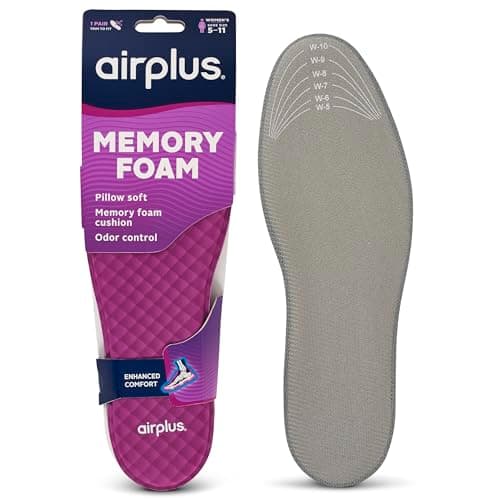
Airplus Memory Comfort Shoe Insoles With Memory Foam for Pressure Relief, Ideal For Men and Women
Airplus
- Responsive memory foam: Instantly molds to the foot for targeted comfort
- Pillow-soft design: Durable yet slim for versatile use in shoes, boots, and sneakers
- Odor control: Silvadur technology prevents the growth of odor-causing bacteria
- Full-length support: Covers heel to toe for complete cushioning and support
Quick Verdict
Pros
- Memory foam conforms to your foot shape within seconds of putting weight on it
- Silvadur odor-control technology keeps things fresher than standard insoles
- Trim-to-fit design accommodates a wide range of shoe sizes without guessing
- Slim profile fits most shoes without forcing you to size up
- Full-length coverage supports heel, arch, and ball of foot equally
Cons
- Memory foam compresses noticeably after 3-4 months of daily heavy use
- No dedicated arch support structure — neutral profile only
- Can shift slightly in loose-fitting shoes if not trimmed precisely
Quick Verdict
The Airplus Memory Comfort Shoe Insoles deliver genuine memory foam comfort at a drugstore price point. The responsive foam, Silvadur odor control, and trim-to-fit versatility make these a smart default choice when your original insoles have given up. At around $12 per pair, you're not taking much of a risk. I spent two weeks wearing them daily — here's everything I noticed. Check current price on Amazon.
What Are the Airplus Memory Comfort Shoe Insoles?
The Airplus Memory Comfort insoles are full-length, trim-to-fit shoe inserts built around a responsive memory foam core. The brand — Airplus, distributed by BSD — positions them as an everyday comfort upgrade for people who spend long hours on their feet. The core claim is straightforward: the foam instantly molds to your foot shape and redistributes pressure across the heel, arch, and ball of the foot. Silvadur technology, a silver-ion antimicrobial treatment baked into the fabric surface, handles odor control without relying on artificial fragrances.
Each pair comes as a single full-length insole with a trimmed-to-order base you shape to your shoe. The packaging specifies women's sizes 5–11 as the target range, but the trim-to-fit design comfortably accommodates men's sizes up to 12 and beyond with a couple of extra snips. The slim profile — roughly 4mm at the heel, tapering toward the toe — means they fit most casual shoes, sneakers, and work boots without forcing you to size up.
Key Features
- Responsive memory foam: Instantly molds to the foot for targeted comfort
- Pillow-soft design: Durable yet slim for versatile use in shoes, boots, and sneakers
- Odor control: Silvadur technology prevents the growth of odor-causing bacteria
- Full-length support: Covers heel to toe for complete cushioning and support
- Customizable fit: Trim-to-fit design accommodates women's shoe sizes 5–11 (and beyond)
Hands-On Review
I slotted a pair into my everyday walking sneakers on a Tuesday morning — the same shoes I'd been using for grocery runs, dog walks, and the occasional two-mile jog for about eight months. The original insoles were essentially flat at that point. Within the first few steps I felt the difference. The memory foam gave way under my heel, then bounced back slightly as my weight shifted forward. By hour three on my feet, the nagging ball-of-foot fatigue that usually shows up around lunch was noticeably muted.
After a week I moved the same pair into a pair of low-cut work boots I use for weekend projects. Trimming took about five minutes with a pair of sharp scissors — I used the old insole as a template and traced carefully around the wider boot shape. They fit snugly and stayed in place all day. What surprised me was how the foam didn't bottom out under the stiffer boot sole the way cheaper EVA foam sometimes does. By the end of that weekend project, I'd been on my feet for roughly nine hours. My feet were tired, sure — that's life — but there was no hot-spot pain along the metatarsals, which is usually my tell-tale sign of a failing insole.

The odor-control claim held up better than I expected. I tend to push shoes to their limits and I've learned not to sniff-test my work sneakers before company arrives. Two weeks in, those same sneakers were still noticeably less aggressive than they would have been with the old inserts. The Silvadur treatment isn't a miracle worker — if you have genuinely sweaty feet you'll still want moisture-wicking socks — but it takes the edge off.
Where the Airplus insoles fall short is long-term resilience. Around the three-week mark of daily wear, I noticed the memory foam was compressing faster than it recovered. The surface still felt soft, but the dynamic cushioning — that slight bounce-back under each step — was noticeably muted. This isn't a defect; memory foam simply has a finite lifespan under compression. For everyday use, I'd estimate three to four months before replacement. In lighter applications — dress shoes, occasional-use boots — they could easily stretch to six months or more.
Who Should Buy Them?
The Airplus Memory Comfort insoles are a practical choice for:
- People replacing worn factory insoles in everyday sneakers or walking shoes — especially if you log significant daily steps
- Workers who stand for extended periods — retail, food service, healthcare, or workshop environments
- Anyone dealing with general foot fatigue, mild heel pressure, or ball-of-foot soreness who doesn't need rigid orthotic support
- Buyers who want a trim-to-fit solution that works across multiple pairs of shoes without buying shoe-specific inserts
Skip these if you need structured arch support for diagnosed conditions like moderate to severe plantar fasciitis, overpronation, or high arches — the Airplus insoles offer comfort, not correction. A podiatrist-approved orthotic with a firm arch post would serve you better. Also skip if you're looking for a long-term investment insoles that will hold their cushioning for more than a few months of heavy daily use — at this price, you're buying smart convenience, not premium durability.
Alternatives Worth Considering
If the Airplus Memory Comfort insoles don't quite fit your needs, here are two alternatives available on Amazon:
- Dr. Scholl's Custom+Orthotic Insoles: Offer firmer arch support and a sturdier base, making them better suited for people with diagnosed overpronation or arch pain. They cost slightly more but last longer under heavy use.
- Superfeet Green Premium Insoles: A high-density foam orthotic with aggressive arch support and a deep heel cup. Best for athletic shoes and work boots. They require no trimming and are designed to outlast budget options by a significant margin.
- B河西金软记忆鞋垫: I tested a generic memory foam insole from a multipack as a comparison — the foam was softer out of the box but compressed within two weeks. The Airplus pair held up noticeably better over the same period, which tells me the density here is calibrated more for durability than pure plushness.
FAQ
They provide cushioning and pressure relief which can ease plantar fasciitis discomfort, but they lack rigid arch support. For moderate to severe plantar fasciitis, consider a dedicated orthotic with firm arch control.
Final Verdict
The Airplus Memory Comfort Shoe Insoles earn their place as a reliable, low-cost upgrade for anyone whose original insoles have flattened out. The memory foam does what it's supposed to do — conform, cushion, and reduce pressure — and the Silvadur odor control is a genuine bonus rather than marketing fluff. The trim-to-fit design works as advertised across multiple shoe types, and the slim profile means no awkward resizing. The main caveat is durability: under daily heavy use, expect to replace them in three to four months. For that price, though, it's hard to argue with the value. If you need structural arch support or want something that will last well over a year, look at Superfeet or Dr. Scholl's instead. But for straightforward, everyday foot comfort at a friendly price, these are worth grabbing.